Brow Services for Sensitive Skin: What's Safe and What to Avoid
If you have reactive or sensitive skin, brow services for sensitive skin don’t have to feel like a gamble. The right treatment, performed by the right specialist with the right products, can give you beautifully defined brows without redness, irritation, or flare-ups.
The key is knowing which services suit your skin type, what to prepare before your appointment, and which treatments to approach with extra caution or avoid altogether.
At Pur Artistry in Denver, both DTC and LoHi specialists consult with every client before beginning any lash or brow treatment. For clients with sensitive, reactive, or condition-prone skin, that consultation isn’t a formality, it’s the most important part of the appointment.
What Does "Sensitive Skin" Actually Mean for Brow Treatments?
Sensitive skin isn’t a single condition, it’s a spectrum. And the category you fall into changes which brow services are safest for you. Understanding your skin type helps your specialist tailor the right approach:
- Reactive skin: flushes, stings, or reddens easily in response to products, temperature changes, or friction. Common with fair or thin skin.
- Allergy-prone skin: a history of reactions to specific dye ingredients, fragrance, or chemical formulas. Requires patch testing before any color or chemical treatment.
- Condition-related skin: active or managed conditions such as eczema, rosacea, dermatitis, or psoriasis near the brow area. These may temporarily rule out certain treatments, especially during flare-ups.
- Compromised skin barrier: skin that’s been recently exfoliated, waxed, sunburned, or treated with retinoids or AHAs. Even naturally non-sensitive skin becomes vulnerable in this state.
Knowing which category fits you is the first step your Pur Artistry specialist will help you work through before any treatment begins.
How to Prep for a Brow Appointment on Sensitive Skin?
A little preparation makes a big difference in how reactive skin responds. Follow these steps before your appointment:
- Pause actives: Stop retinol, tretinoin, AHAs and BHAs around the brows 5–7 days before waxing or lamination (48 hours before tinting).
- Skip facials: Avoid chemical peels, laser or microdermabrasion for at least 48 hours beforehand.
- Come bare: Arrive with clean, makeup-free brows and no serums or oils applied that day.
- Book a patch test: Schedule one 24–48 hours ahead for any dye or chemical treatment.
- Disclose everything: Tell your specialist about skin conditions, prescriptions, allergies, recent treatments, and pregnancy or breastfeeding.
Read Also: What Is a Lash Brow Service? Everything You Need to Know
Is Brow Tinting Safe for Sensitive Skin?
Short answer: Yes, for most sensitive skin types, with one key precaution.
Brow tinting is the least invasive color treatment available. The dye is applied to the surface of the brow hairs only, it doesn’t penetrate the skin, doesn’t involve heat, and doesn’t require needles or chemical softening agents. For most reactive skin types, this makes it the most accessible brow service available.
The one genuine risk is an allergic reaction to the dye ingredients. Hair dyes and brow tints can cause allergic reactions even in people without sensitive skin, which is why a patch test is non-negotiable before your first tinting appointment or any time you try a new product.
A patch test involves applying a small amount of dye behind the ear or on the inner arm and waiting 24 to 48 hours. If you notice redness, itching, or swelling at the test site, the tint should not be applied to the brow area.
At Pur Artistry, the products used for brow tinting are selected for professional-grade safety and compatibility with most skin types. If you have a known dye sensitivity or a history of reactions to hair color, let your specialist know before booking.
Avoid brow tinting if you have an active rash, broken skin, or open cuts near the brow area, or a confirmed allergy to para-phenylenediamine (PPD), a common ingredient in semi-permanent brow dyes.
Not sure which brow service your skin can handle? Book a consultation at Pur Artistry and we’ll assess your skin and recommend the safest option before anything is applied.
Is Brow Waxing Safe for Sensitive Skin?
Short answer: Yes, but the type of wax and your skin’s condition on the day both matter.
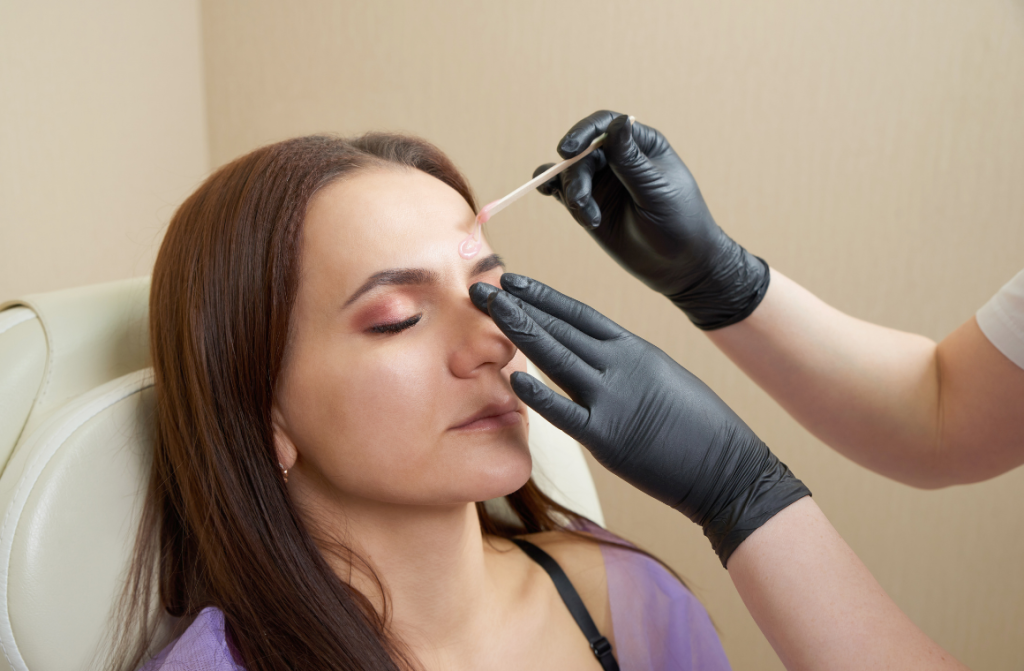
Brow waxing removes hair from the root, which temporarily leaves follicles open and skin slightly more reactive than usual. For sensitive skin, the choice of wax and pre-appointment prep make a significant difference.
Hard wax stays on the hair rather than the skin, and is the preferred choice for sensitive skin. Unlike soft (strip) wax, which adheres to both hair and the surrounding skin surface, hard wax grips the hair and peels away cleanly, reducing the mechanical stress on delicate skin. (See the prep steps above, pausing retinoids and skipping facials beforehand is especially important for waxing.)
If you have conditions like eczema, rosacea, or psoriasis near the brow area, waxing can irritate the skin and worsen flare-ups. In these cases, your Pur Artistry specialist may recommend waiting until any active flare has fully settled before proceeding.
Is Brow Lamination Safe for Sensitive Skin?
Short answer: It can be, but it requires more careful screening than tinting or waxing.
Brow lamination uses a chemical lifting solution that restructures the bonds within the brow hairs to reposition them. When applied correctly by a trained specialist, the solution contacts the hairs rather than the skin, but the proximity to the skin surface means clients with a compromised or reactive barrier need extra care.
If you have eczema, rosacea, or dermatitis, brow lamination may trigger flare-ups, so a consultation and patch test should be mandatory. Clients with open wounds, broken skin, or inflammatory conditions like psoriasis in the brow area should avoid the treatment until fully healed.
For sensitive-skin clients who are otherwise suitable for lamination, Pur Artistry recommends:
- A patch test at least 48 hours before the full treatment
- Disclosing your complete skincare routine, especially retinoids, AHAs, or prescription actives
- Pausing retinol and exfoliating acids for 5 days before and after lamination
- Requesting a fragrance-free, ammonia-free formula where available
Redness, itching, or swelling after treatment are signs the formula was too harsh, choose a studio that tailors services for sensitive clients with gentler solutions.
Read Also: What Is Brow Lamination? Everything You Need to Know
Is Microblading Safe for Sensitive Skin?
Short answer: It’s the highest-risk option for sensitive skin and should be approached with significant caution.
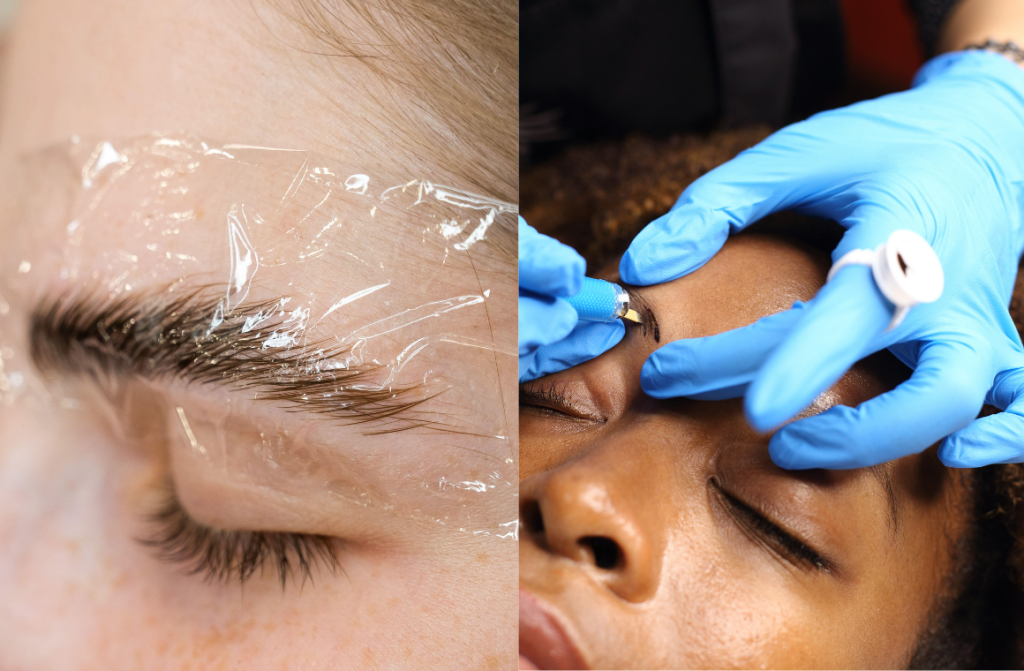
Microblading involves making small incisions in the upper layers of the skin to deposit pigment. For most clients, this is manageable with numbing cream and proper aftercare. For sensitive-skin clients, particularly those prone to scarring, slow healing, or inflammatory conditions, the risk profile is meaningfully higher.
Avoid microblading or any invasive technique if your skin is prone to scarring or delayed healing. The American Academy of Dermatology also notes that tattoo and permanent makeup procedures can carry risks including infections, allergic reactions, and scarring, risks that are amplified when the skin barrier is already compromised or reactive.
If you have sensitive skin and want long-lasting brow definition, a consistent brow tinting routine or brow lamination (with proper patch testing) will almost always be a safer starting point.
Safety Ranking: Brow Services for Sensitive Skin
From lowest to highest risk for reactive or sensitive skin:
Risk Level | Treatment | Why |
Lowest | Brow Tinting | Dye on hair only; no skin contact; non-invasive; patch-testable |
Low | Brow Waxing (hard wax + retinoid-free prep) | Physical hair removal; manageable with the right products and prep |
Moderate | Brow Lamination | Chemical solution near skin; safe for most with a patch test; avoid during flare-ups |
Highest | Microblading | Skin incisions; healing period; higher infection/scarring risk for reactive skin |
What Should You Tell Your Pur Artistry Specialist?
Always disclose the following before any brow treatment:
- Any skin conditions — eczema, rosacea, dermatitis, psoriasis — even if currently managed
- Prescription skincare, especially retinoids, tretinoin, or topical steroids
- Known allergies to dyes, fragrances, latex, or chemical agents
- Any recent treatments — chemical peels, laser, microdermabrasion — in the past two weeks
- Whether you are pregnant or breastfeeding, since some chemical treatments aren’t recommended during this period
The more your specialist knows, the more accurately they can tailor your treatment or recommend a safer alternative if your skin isn’t ready.
Read Also: What Is Brow Tinting? A Simple Guide to Fuller, Defined Brows
You Don't Have to Miss Out on Beautiful Brows
Sensitive skin doesn’t mean skipping brow treatments. It means choosing a specialist who asks the right questions, uses the right products, and takes your skin’s needs seriously. At Pur Artistry in Denver, every client with sensitive or reactive skin receives a thorough consultation before any brow service begins.
Patch testing is available, product formulas are selected for skin safety, and your specialist will always recommend the most appropriate treatment for where your skin is right now.
Don’t let sensitive skin hold you back from your best brows. Book a consultation at Pur Artistry’s DTC or LoHi studio in Denver and let our specialists find the right treatment for your skin.
Frequently Asked Questions
Yes, in most cases. Brow tinting is the least invasive brow color treatment available, the dye is applied to the hair surface only and doesn’t contact the skin the way chemical treatments do. The essential precaution for sensitive skin is a patch test at least 24 to 48 hours before your appointment.
This confirms your skin won’t react to the dye ingredients before it’s applied to your full brow area. At Pur Artistry, let your specialist know about any sensitivities before booking and a patch test can be arranged.
Possibly, but timing and skin condition at the time of your appointment matter significantly. Brow lamination uses a chemical lifting solution that can aggravate already-inflamed or compromised skin. If your eczema or rosacea is currently in a flare-up near the brow area, it’s best to wait until the skin has fully settled before proceeding.
When your skin is calm and between flare-ups, a patch test and consultation with your Pur Artistry specialist can determine whether lamination is appropriate for your skin at that time.
Hard wax is the preferred option for sensitive skin. Unlike soft (strip) wax, which adheres to both the hair and the skin surface, hard wax grips only the hair and lifts cleanly away, reducing surface friction and mechanical stress on reactive skin.
At Pur Artistry, your specialist will select the most appropriate wax formula based on your skin type. If you have active skin conditions near the brow area or have recently used retinoids, always disclose this before your waxing appointment.
Stop using retinol, tretinoin, AHAs (glycolic acid, lactic acid), and BHAs (salicylic acid) around the brow area for at least 5 to 7 days before any brow waxing or lamination appointment. These ingredients thin the skin’s outer layer, making it significantly more vulnerable to irritation, lifting, or chemical sensitivity during treatment.
For brow tinting, avoiding active exfoliants for 48 hours before is sufficient. Always mention any prescription skincare to your specialist during the consultation.
Microblading carries the highest risk among brow treatments for clients with sensitive or reactive skin. The procedure involves making small incisions in the skin to deposit semi-permanent pigment, which creates a meaningful healing period and risk of irritation, infection, or scarring risks that are elevated for skin that is already reactive or prone to delayed healing.
For clients with sensitive skin who want a long-lasting brow result, brow tinting combined with brow lamination is a far safer and more appropriate starting point. Always consult with both a brow specialist and a dermatologist before considering microblading.
Related posts