Every October in Denver, the same thing happens. Skin that managed fine through summer maybe even looked its best, suddenly feels tight, looks dull, and starts reacting to products that never caused issues before. The standard advice is to switch to a richer moisturizer. Most people try that. Most people find it doesn’t fully work.
Dry skin in Denver’s fall isn’t a moisturizer problem. It’s a barrier problem. And until the barrier is addressed, no amount of product layering at home closes the gap between what your skin needs and what it’s getting.
At Pur Artistry in LoHi, we see this shift every year in October clients coming in with skin that changed seemingly overnight, looking for an explanation and a solution that actually sticks. Here’s what’s happening, why Denver makes it worse than most places, and what professional treatment does that home care can’t.
What's Actually Happening to Your Skin in Fall?
The skin barrier, the outermost layer of the epidermis is a lipid matrix that holds moisture in and keeps environmental irritants out. It functions like a brick wall: skin cells are the bricks, and the lipids (ceramides, fatty acids, cholesterol) are the mortar between them.
When that mortar is intact, skin holds hydration, tolerates products, and recovers from environmental stress. When it’s compromised, moisture escapes constantly, skin becomes reactive to things it previously tolerated, and no topical product can fully compensate because of the barrier itself, the thing that would hold any product in is what’s broken.
Fall in Denver breaks that mortar in three simultaneous ways.
Humidity drops sharply. Outdoor humidity in Denver falls from 30–40% in summer to 15–25% by October. Indoor heating systems, which kick in as temperatures drop, pull another 10–15% out of the indoor air. The skin is now living in air that is actively pulling moisture out of it faster than the barrier can replenish.
UV accumulation surfaces. Denver sits at 5,280 feet, and UV intensity increases roughly 4% per thousand feet of elevation above sea level. That means Denver skin is absorbing approximately 20% more UV than the same latitude at sea level, all year, including through October. The damage from five months of summer UV doesn’t show immediately. It shows now: as uneven tone, textural changes, dullness, and a barrier that’s been quietly degraded by months of UV stress and is now struggling to compensate in dry air.
Temperature whiplash. Denver’s fall is not a gentle transition. October 2026 saw highs in the mid-to-upper 80s in the first week, then rapid cooling. The skin’s barrier adaptation cycle, the process by which it adjusts ceramide production and lipid ratios to match the environment, can’t keep up with that pace of change. It falls behind, and the gap shows up as dryness, tightness, and reactivity.
These three things happen at the same time, every October, every year. That’s why dry skin in Denver’s fall feels different from seasonal dryness in other climates, it’s not one stressor, it’s three.
Why Moisturizer Alone Doesn't Fix It?

This is the most important thing to understand about barrier-compromised skin: a moisturizer sits on top of the barrier, or just below it. It can’t rebuild the barrier’s structural components.
Ceramides, fatty acids, and cholesterol, the lipids that make up the mortar between skin cells, need to be replenished from the inside (through healthy cell turnover) and supported from the outside with professional-concentration ingredients that actually reach the layers where they’re needed.
When people layer moisturizer on compromised skin, here’s what happens: the product sits on the surface, creates temporary relief, and then evaporates into Denver’s dry air, taking some of the skin’s own moisture with it. The skin feels hydrated for an hour or two. Then it feels tight again. Then more moisturizer goes on. The cycle continues.
This isn’t a product failure. It’s a sequencing failure. The barrier needs to be repaired before a moisturizer can do its job, and barrier repair requires specific ingredients, hyaluronic acid layered on damp skin, niacinamide at professional concentrations, centella asiatica with adequate dwell time, applied in a specific sequence that home care can approximate but rarely replicates.
What Fall Dry Skin in Denver Actually Needs
Step 1: A Skin Analysis Before Anything Is Applied
Not all dry skin in fall is the same. Some people have genuine barrier compromise, ceramide-depleted skin that needs intensive repair and zero exfoliation. Some people have dehydration layered on top of an otherwise functional barrier skin that needs hydration delivered correctly, not barrier rebuilding. Some people have UV-accumulated texture changes that need controlled cellular turnover before the barrier work can take hold.
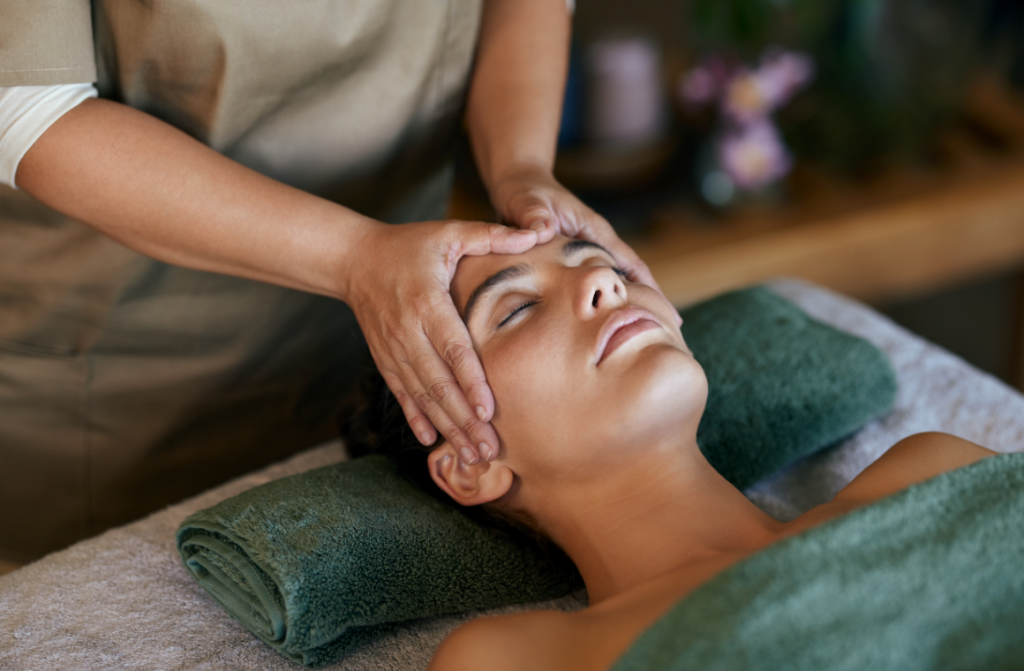
Treating these the same way produces inconsistent results. At Pur Artistry, every K-Beauty Facial begins with a skin analysis before any product touches the face. The analysis determines whether the Pur Zen Facial (barrier repair, calming, no exfoliation for reactive or compromised skin) or the K-Glow Facial (gentle exfoliation, brightening, circulation-stimulating massage) is appropriate for what’s actually presenting.
Step 2: Double Cleanse That Doesn't Strip
Denver fall skin is already stripped. A cleanser that strips further common in anti-acne or deep-cleanse formulas pushes the barrier further into deficit. The double cleanse at Pur Artistry uses an oil-based first cleanser to dissolve the day’s buildup, followed by a gentle water-based second cleanser. The goal is to remove what needs to come off and stop there.
Step 3: Hyaluronic Acid Applied to Damp Skin in Layers
Hyaluronic acid is a humectant: it draws moisture toward itself. In Denver’s dry air, if applied to dry skin, it draws moisture up from deeper skin layers toward the surface where it then evaporates. The result is the opposite of what’s intended.
Applied to damp skin, then immediately layered with an essence to trap it, hyaluronic acid locks moisture into the epidermis before the air can take it. In a professional setting, this layering happens multiple times in sequence three to five layers of hydration, each sealing the last. That’s what creates the hydration depth that actually lasts past the treatment room.
Step 4: Niacinamide and Centella Asiatica at Professional Concentration
Niacinamide at 5%+ strengthens the barrier, reduces redness, and regulates sebum applied early in the sequence, before heavier activities, so it reaches the skin unimpeded. Centella asiatica (cica) stimulates the skin’s own ceramide production and calms active inflammation applied with a mask that allows 15–20 minutes of dwell time, because this ingredient works through sustained contact, not a quick application.
Retail versions of these ingredients exist. But retail concentrations are typically 1–2% for niacinamide (versus 5%+ professionally) and the dwell time doesn’t happen at home the way it does in a treatment room. The gap between what’s available over the counter and what’s applied professionally is not trivial.
Step 5: Sealing Moisturizer Matched to Barrier State
The final step seals everything in but the moisturizer is matched to what the barrier actually needs that day. After intensive hydration, a lightweight water-based formula. After barrier repair work, something richer and more occlusive. The wrong choice at this step can undo the hydration work by sitting too heavily and blocking the natural skin processes that consolidate what was applied.
How Fall Dry Skin Compounds Over Time Without Treatment
One month of untreated barrier compromise in October becomes two months of compromised baseline heading into November. The skin’s cell turnover cycle is approximately 28 days. Each cycle in a barrier-compromised state produces a weaker starting point for the next.
By the time clients come in for the first time in November or December, they’ve often been running a three-month deficit. The sessions that follow are catching up, not building forward.
Monthly K-Beauty Facials starting in October, timed to the skin’s own renewal cycle, mean each session builds on what the previous one established. Barrier strength accumulates. Reactivity decreases. The skin goes into winter from a stronger position rather than an already-depleted one.
Three to four months of monthly professional treatment is typically where clients notice a real baseline shift: not just skin that feels good after a session, but skin that holds that improvement between sessions.
What You Can Do at Home Between Sessions
Professional treatment addresses what home care can’t replicate. Home care between sessions is what maintains what the professional session establishes.
For dry skin in Denver’s fall:
- Apply hyaluronic acid serum to damp skin only directly after washing, before the skin fully dries. Follow immediately with a moisturizer to seal it.
- Switch to a fragrance-free, ceramide-containing moisturizer. Fragrance is a common barrier irritant; ceramides directly replace what fall is depleting.
- Drop washing water temperature to lukewarm. Hot showers accelerate barrier stripping.
- Add a humidifier to the bedroom. Eight hours in humid air is meaningfully different from eight hours in 15% humidity.
- Reduce active ingredients temporarily retinol and vitamin C both require a functional barrier to work without irritation. If your skin is reactive, pausing these until the barrier is rebuilt reduces inflammation load.
Dry Skin in Denver's Fall Needs More Than a Moisturizer Switch
Dry skin in Denver’s fall is a barrier problem driven by three simultaneous environmental stressors: humidity drop, UV accumulation, and temperature whiplash that home care addresses incompletely. The solution is barrier repair, delivered at professional concentration and in the correct sequence, starting in October when the stressors begin rather than November when the damage is already compounded.
At Pur Artistry in LoHi, our K-Beauty Facial is built specifically for Denver’s climate and this seasonal transition, barrier-first, analysis-led, with professional-concentration ingredients applied in an absorption sequence that home care can’t replicate.
If your skin has already started changing this October, now is the right time to address it.
Tell us what your skin has been doing since the season changed, we’ll build the session around what it actually needs right now.
FAQs
Denver’s fall creates three simultaneous skin stressors: outdoor humidity drops to 15–25%, indoor heating strips another 10–15% from the air, and months of UV accumulation from Denver’s high-altitude sun surfaces as barrier damage. All three hit at once in October, which is why the change feels sudden.
Not on its own. A moisturizer sits on top of or just below the barrier, it can’t rebuild the structural lipids (ceramides, fatty acids) that dry fall conditions deplete. Barrier repair requires specific ingredients at professional concentrations, applied in a sequence that prepares the skin to receive and hold them.
The K-Beauty Facial at Pur Artistry LoHi, specifically the Pur Zen Facial for reactive or compromised skin, or the K-Glow Facial for skin that needs gentle exfoliation alongside barrier repair. A skin analysis at the start of every session determines which is appropriate for what’s actually presenting.
Monthly aligned with the skin’s 28-day cell renewal cycle. Starting in October means each session builds on a progressively stronger barrier rather than catching up from a deficit. Three to four months of monthly treatment is typically when a real baseline shift becomes visible.
Yes. A compromised barrier disrupts the skin’s sebum regulation and microbiome. Some people experience breakouts or congestion in fall that look like oily skin but are actually the skin overproducing sebum in response to barrier stress. The treatment is barrier repair, not acne treatment.
Related posts